Ikaria
Far from the typical Greek Island tourist trail, Ikaria hums with a different energy — unhurried, grounded, and quietly brimming with vitality.
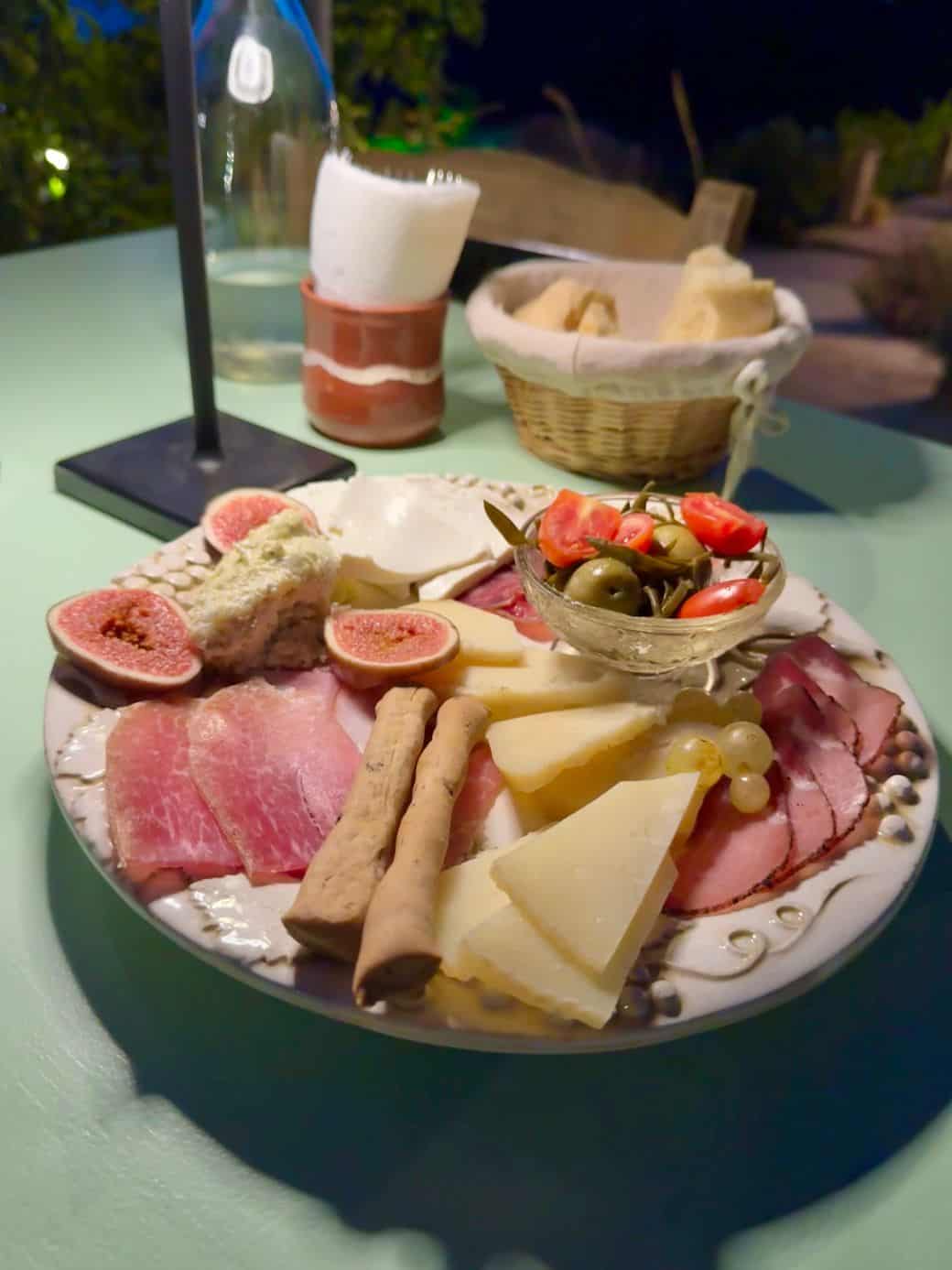
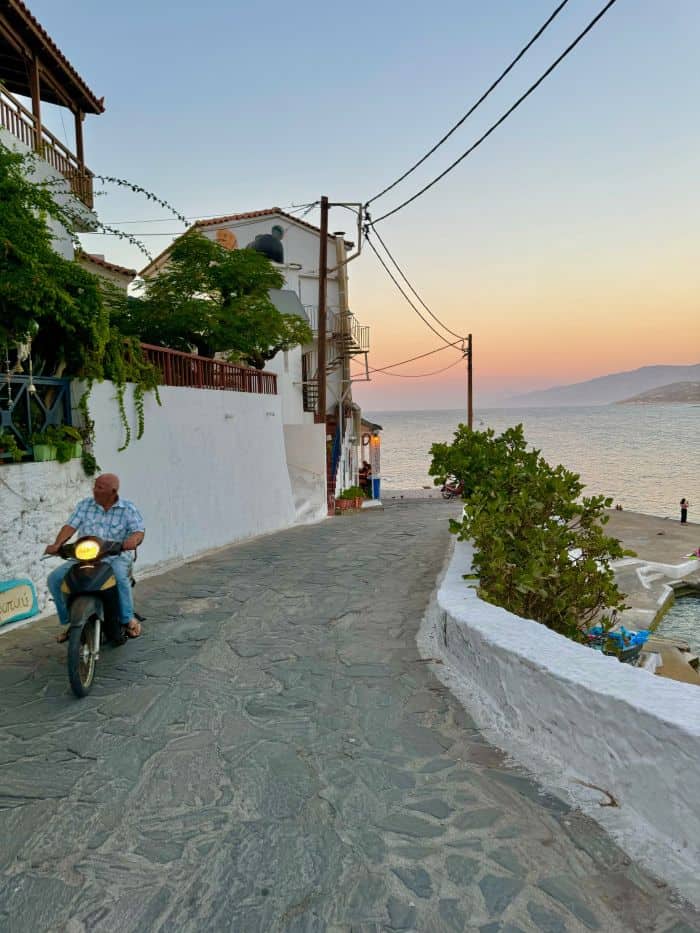
Tucked away in the Northern Aegean, this rugged, pine-covered island isn’t polished like Santorini or party-ready like Mykonos. Instead, Ikaria moves to its own rhythm – one defined by mountain hikes, slow-cooked meals, and nights that begin with live music and end when the last bottle of red is shared.
Famous for its residents’ remarkable life expectancy, Ikaria is a Blue Zone – one of only five places in the world where people routinely live into their 90s and beyond. But it’s not just about long life; it’s about good life. In villages like Christos Raches, shops open when the locals feel like it (hint: that’s usually well after sunset), and strangers are still offered coffee – or wine – without a second thought.
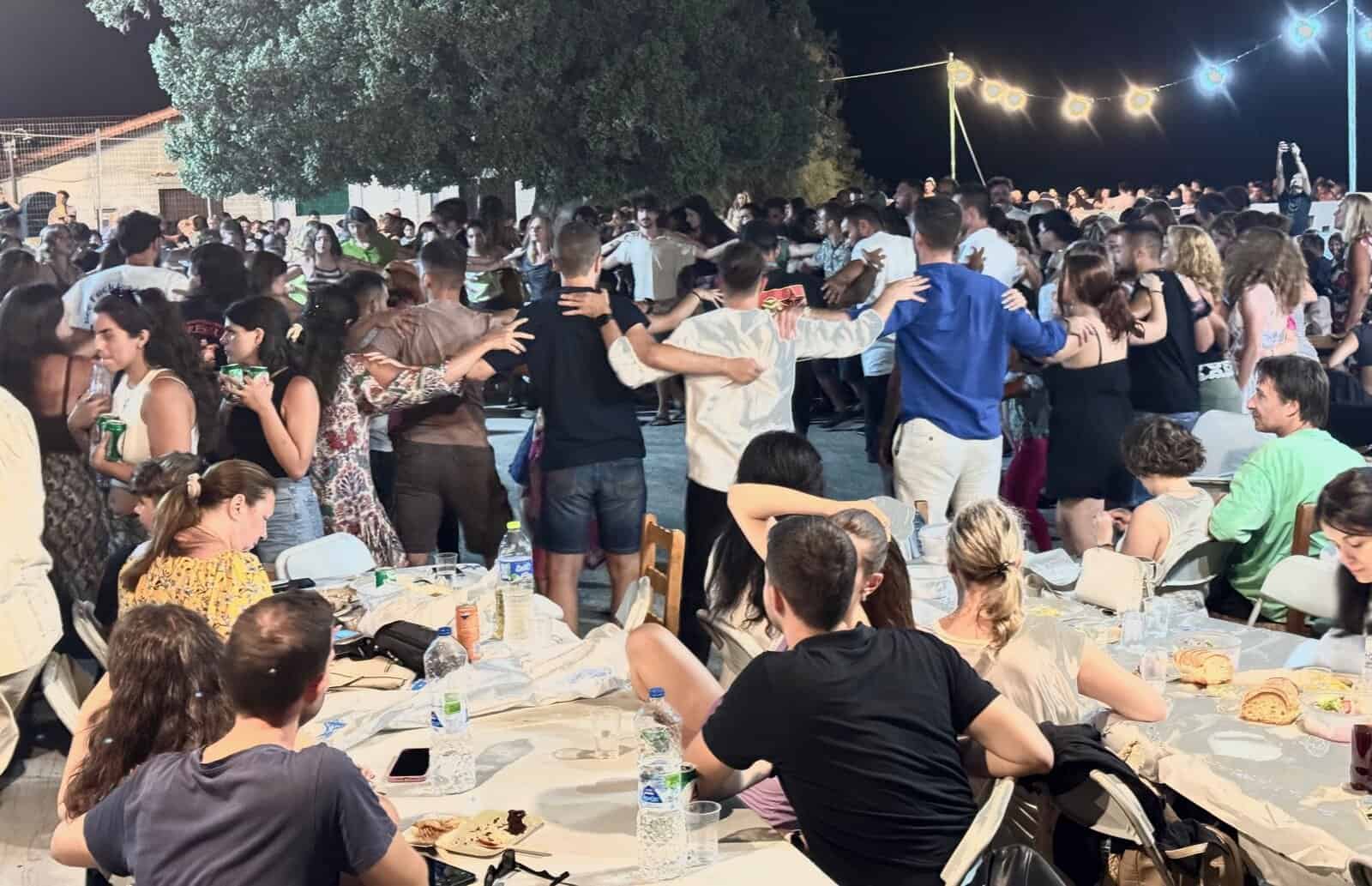
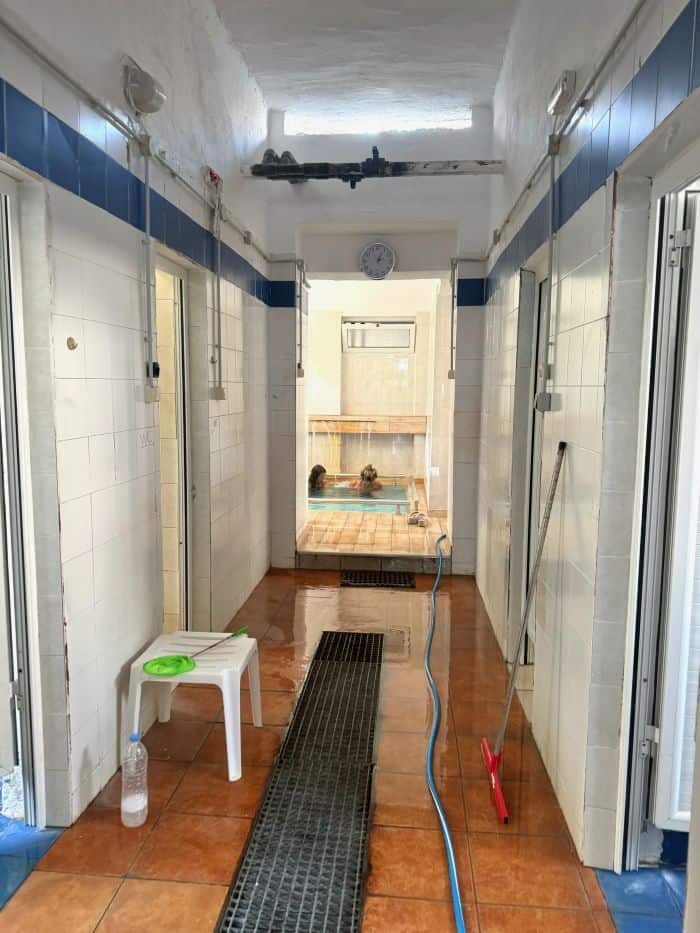
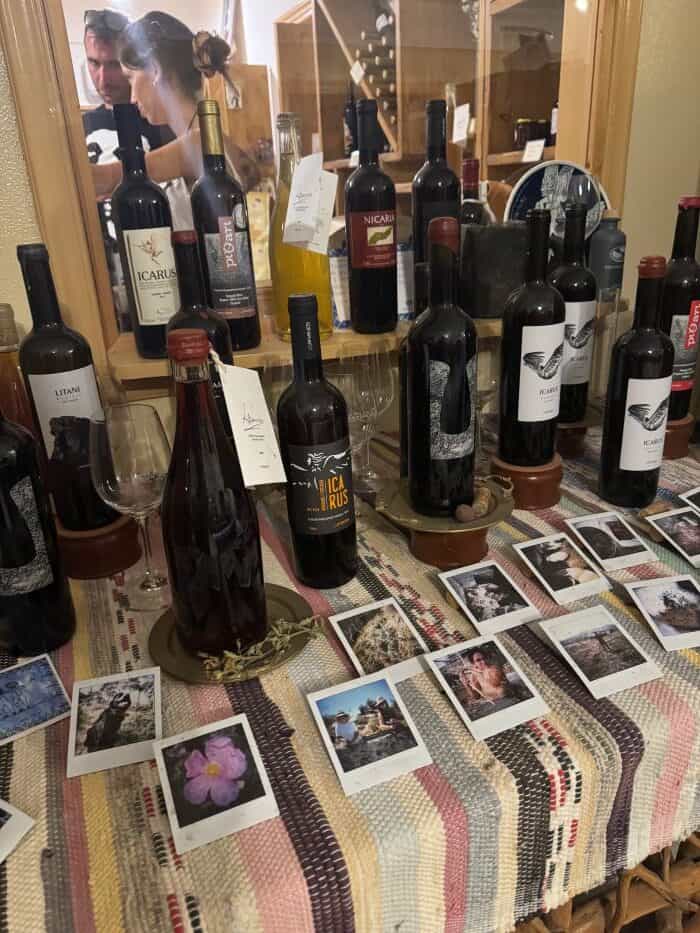
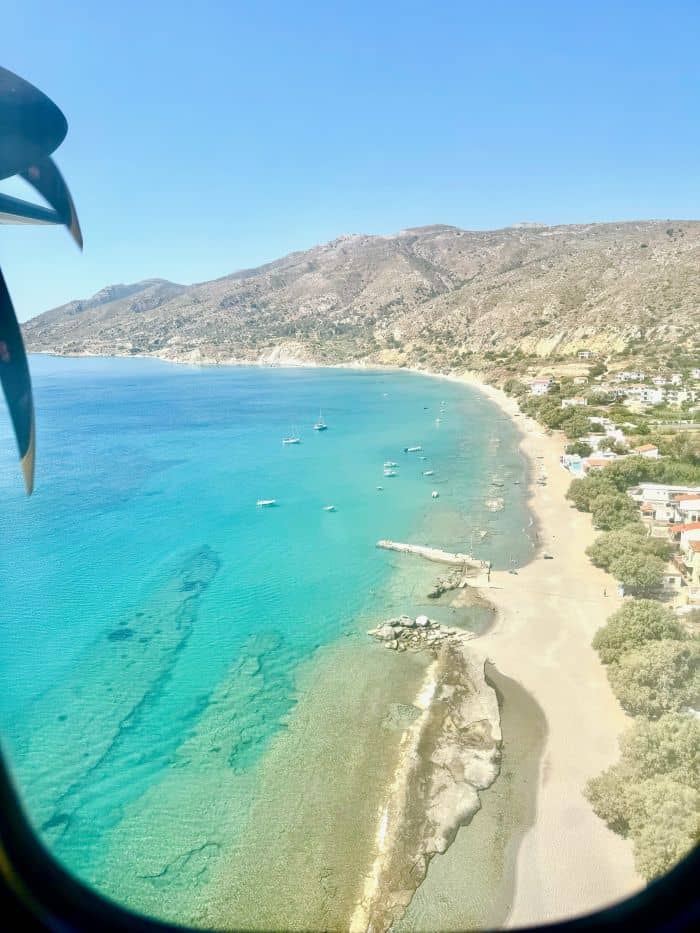
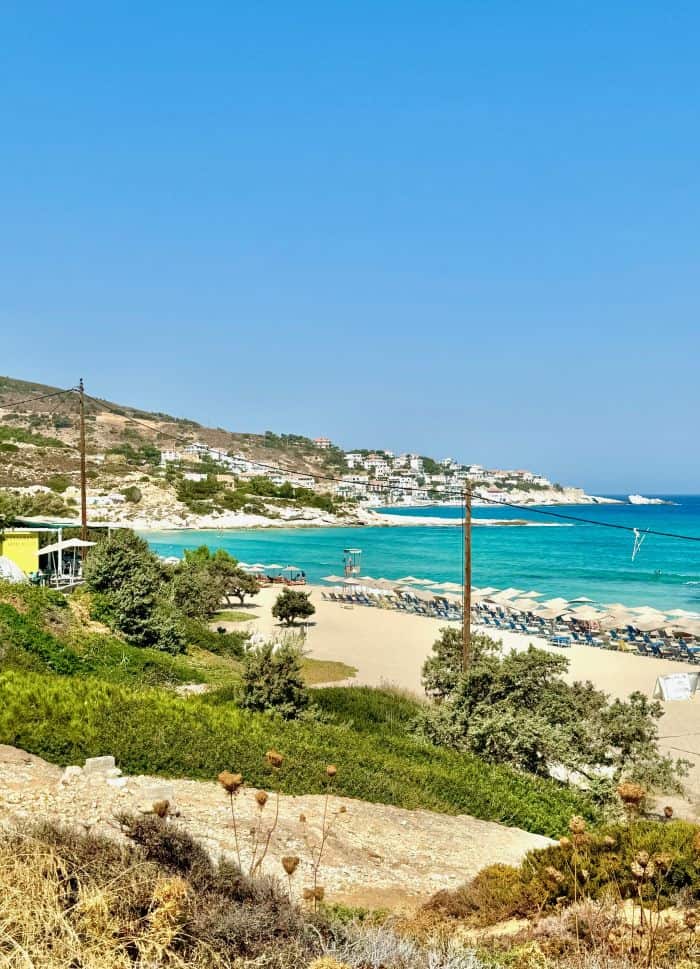
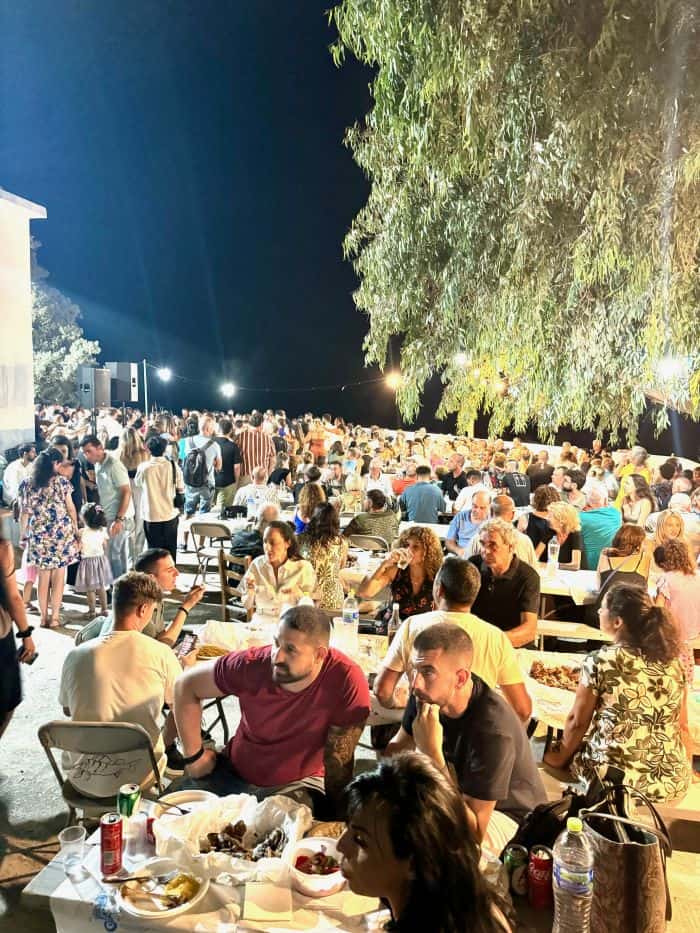
The island offers a raw, authentic Greek experience: wild beaches with no sunbeds in sight, ancient hot springs bubbling near Therma, and festivals (panigyria) where everyone, including the village yiayia, dances until dawn. Whether you’re hiking through fragrant pine forests, sipping Ikarian wine in Evdilos, or soaking in the thermal waters, Ikaria invites you to disconnect from the rush and reconnect with something deeper.
This isn’t a place to tick boxes – it’s a place to breathe, taste, wander, and wonder. Just be warned: you might never want to leave.
Easter - September
5 days
Northern Aegean Islands
What to expect
karia is a rugged, sparsely developed island known for its mountainous terrain, remote beaches and strong local traditions.
Tourism is present but not dominant, which preserves a largely authentic character. Visitors can expect understated accommodation, long travel times between regions and a clear emphasis on nature, walking, wellness and community events such as the island’s well-known panigiria.
The island’s Blue Zone reputation continues to attract interest in longevity, lifestyle and health tourism.
Language: Greek, but most people in tourist areas speak English. It will be handy to know some common greek words and phrases.
Currency: Euro
Credit Cards and ATMs: Credit Cards will be accepted at most hotels and tavernas in the main towns, but you may be asked for cash a fair bit. ATMs are in Agios Kirykos, Evdilos and Armenitsa.
Plugs: The plugs in Greece are Type C and F. The standard voltage is 230 V, and the standard frequency is 50Hz.
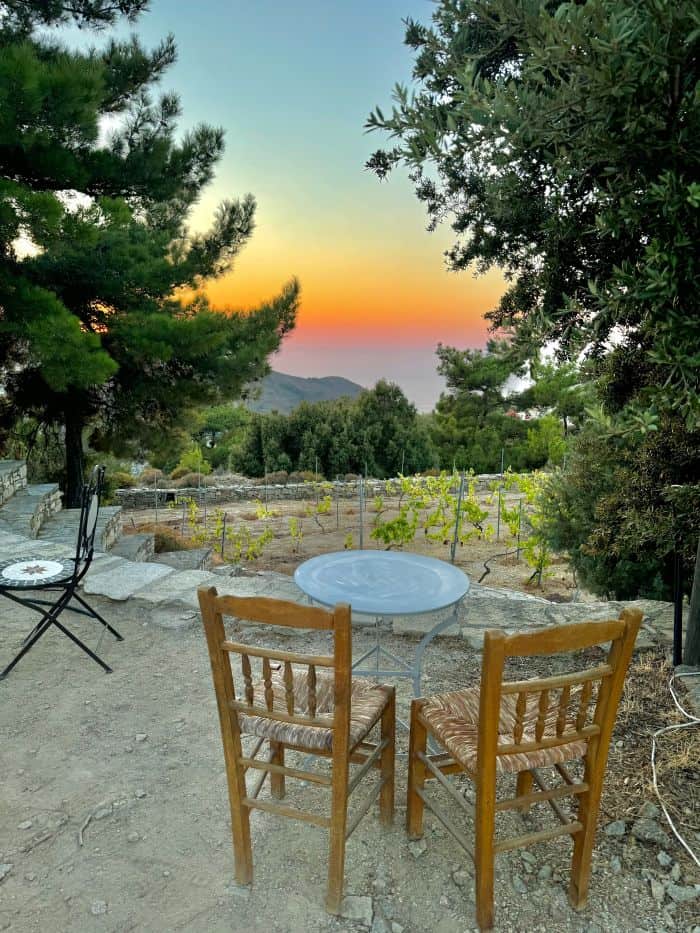
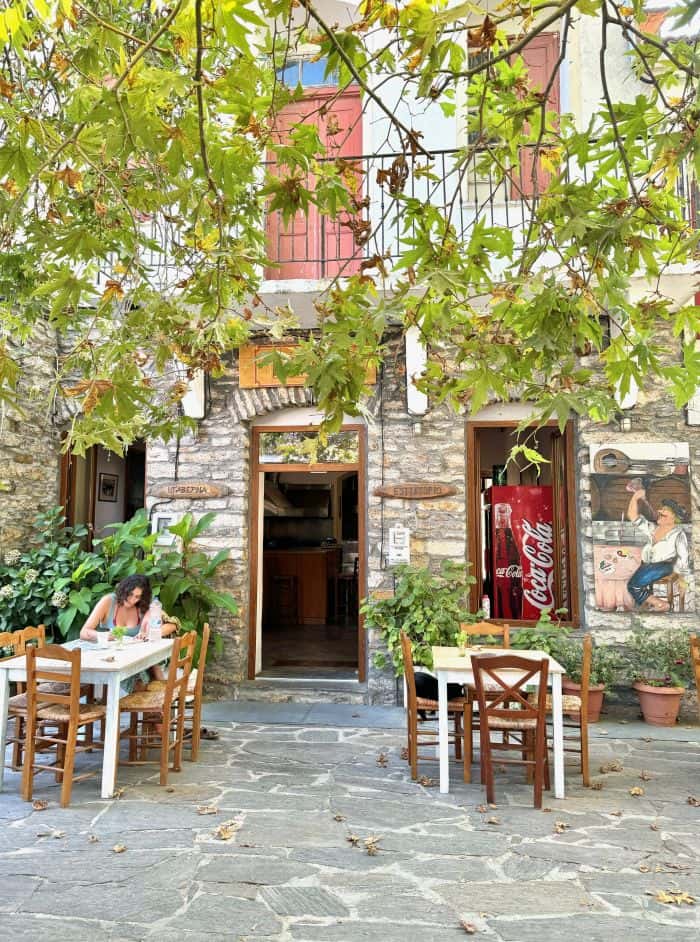


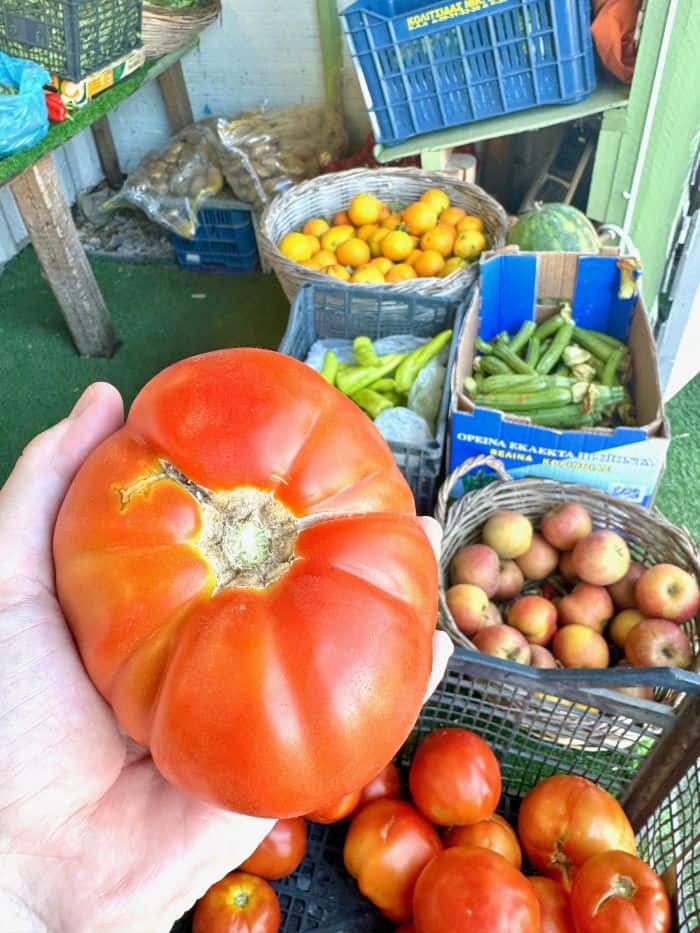
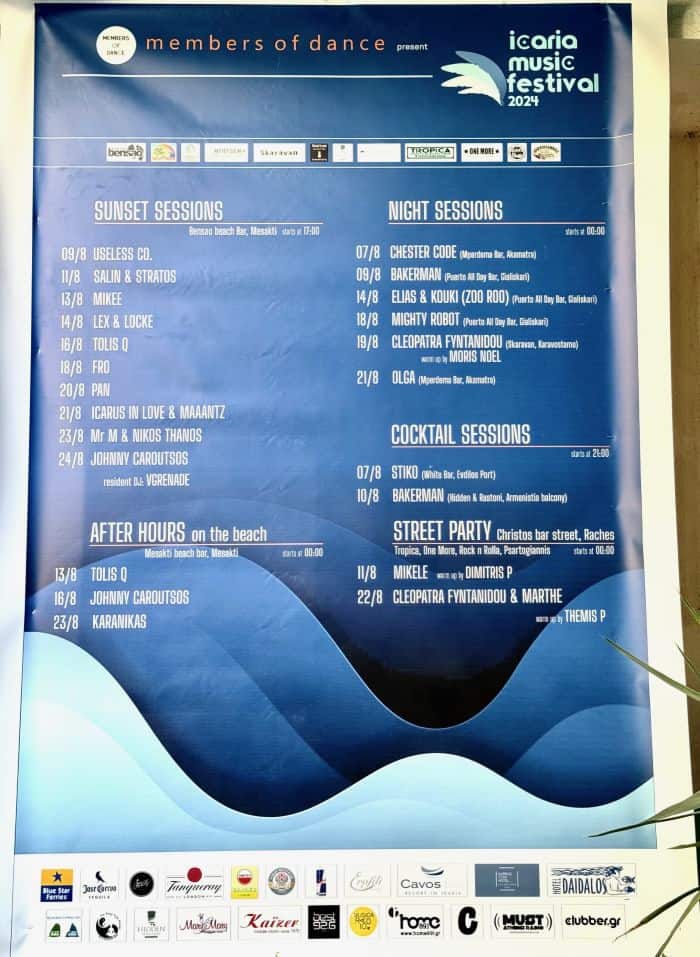
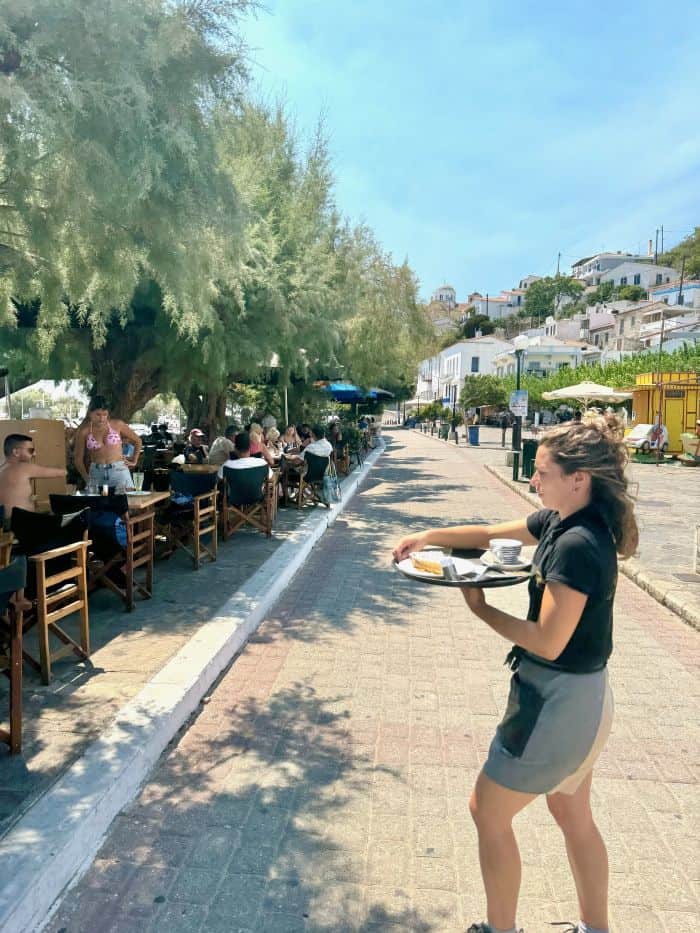

Best time to visit Ikaria
The highlight of the year are the Paniyris on August 15

How long to go for
It’s a big island, so at least 5 days – split it between the north and the south

How to get around Ikaria
It is best to have a car, but the roads are not great. There are buses too.
How do you get to Ikaria
Access is via domestic flights from Athens and Thessaloniki or by long ferry routes from Piraeus and nearby islands.
Where is the best place to stay?
Armenistis dominates searches, followed by Nas, Evdilos and Agios Kirykos depending on the traveller’s style.
Due to transport challenges, we recommend dividing your time between a few days in the north at Aemenitsis or Evdilos and a few days in the south at Therma or Agios Kirykos.
Do you need a car on Ikaria?
Yes. Public transport is limited, and many beaches and villages are down narrow, steep or remote roads.
Why is Ikaria a Blue Zone?
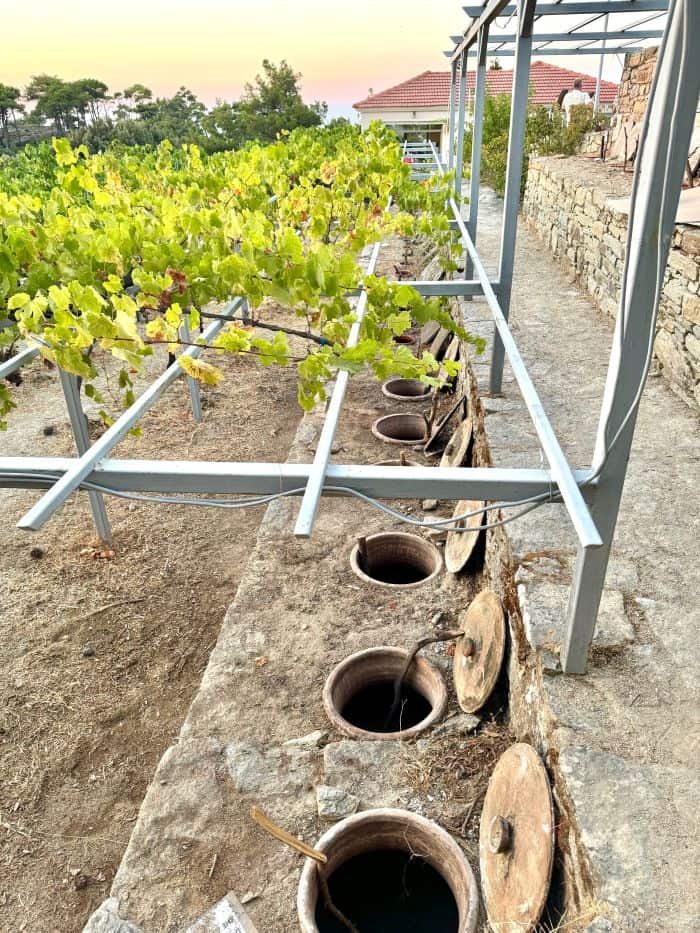
The island is associated with longevity due to its local diet, physical activity, strong community networks, and low-stress lifestyle.
YOU MAY ALSO LIKE
SAMOS ISLAND – A COMPLETE GUIDE
Samos Island is a lush, tree-covered island located in the eastern Aegean Sea in Greece, often...

PATMOS ISLAND – THINGS TO DO ON PATMOS AND MORE
The island of Patmos, in the Aegean Sea, is the third most populous island in the Greek Dodecanese...
HIGHLIGHTS OF METEORA TOUR – MONASTARIES, BATTLEFIELDS, WATERFALLS AND MORE
The Greek Islands are incredible and are the most popular destinations in Greece. The Mainland,...
