

Greece
Travel
Secrets
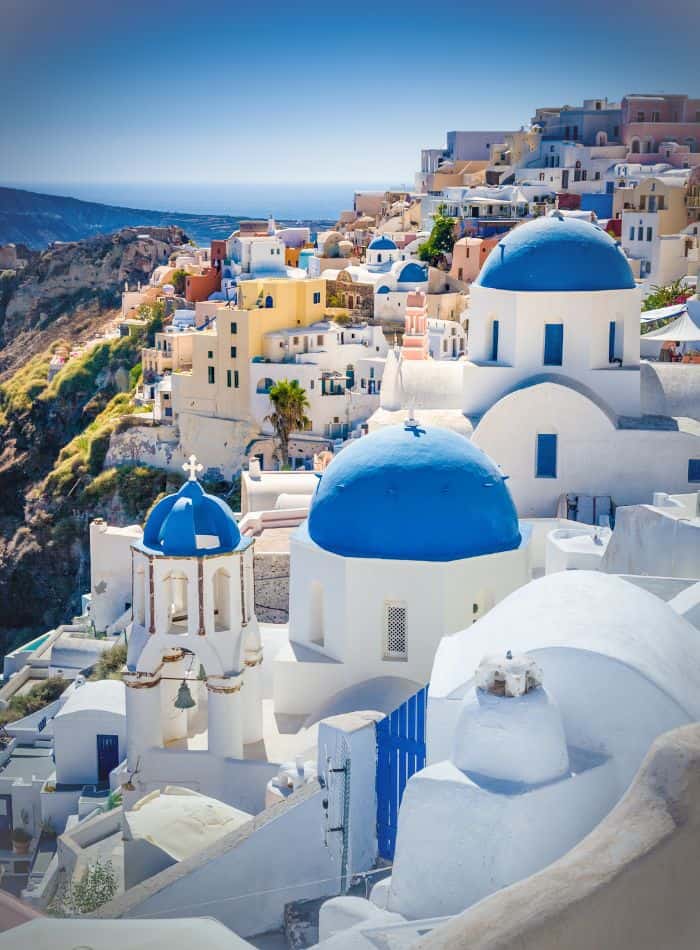
Blue Church Domes, white-washed villages, ancient ruins & monuments, sweeping valleys and majestic mountains. The sparkling sea, charming villages, warm and friendly people and delicious food – Greece has got it all!
Plan your trip to Greece here
Yassas and hello!
We are Sandy and John Papas, from Brisbane, Australia.
Thanks to John’s fabulous Greek heritage, we visit Greece each year, sometimes twice, and explore as much of the country as we can, as well as returning to old favourites.
Like you, we are visitors, and have become experts at wrangling suitcases, ferry hopping and airport intricacies.
We think we’ve learnt a trick or two and hope to pass on those tips to make your visit the best it can be.
We have visited Greece with our 3 children, our parents and many friends, and Sandy is sometimes there solo too.
What to expect
Language: Greek, but most people in tourist areas speak English ( and more)
Currency: Euro
Weather: With a Mediterranean Climate, Greece has a dry, temperate climate with hot summers and cold, rainy winters. It snows each year, especially in the north where there are ski resorts.
It is important to know about the Meltemi Wind that blows from May to October and can cause disruption, but also has its benefits.
Credit Cards and ATMs: You can find ATMs all over Greece. Every major town and city has them, even in mini marts, travel agencies and some hotel lobbies. Visa and Mastercard are widely accepted, and in fact, it is illegal for taxis, hotels and any business working in tourism not to accept them.
Plugs: The plugs in Greece are Type C and F. The standard voltage is 230 V, and the standard frequency is 50Hz. For many people, appliances and devices will work fine, but if you are from the USA, you will need a dual-voltage styling iron or hair dryer.






Best time to visit Greece
Year-round in Athens and many mainland spots
April – November for the islands, although some will be May – October

How long to go for
At least 10 days if possible. Two weeks is better, but 3 or 4 is ideal as there is a LOT to see and do.
When is the best time to go to Greece?
Late May to early October for beach weather, April to early June and September to October for milder travel.
Is Greece safe?
Yes. Petty theft exists in busy areas. like most countries, but violent crime is low, and tourism infrastructure is strong.
The main place petty crime may occur is Athens, but overall safety there is good.
How do you get around Greece?
A mix of ferries, domestic flights, buses and car hire depending on the place.
Is Greece expensive?
Moderate. Islands like Santorini and Mykonos are high-end, and mainland and lesser-known islands are far cheaper. Food portions are usually very generous, so dining out in local tavernas is very affordable.
Can I island hop easily?
People commonly don’t realise Greece is a cluster of island groups, not one connected network. There are 6 groups, plus Crete.
Is tap water safe to drink in Greece
Safe on the mainland and most large islands. On many smaller islands, especially in the Cyclades, tap water comes from desalination plants, so it doesn’t taste great and isn’t recommended for drinking; people use bottled water instead. You can still use tap water for cooking and brushing teeth.